
Blog Details
- October 31, 2026
How to Care for Handcrafted Wooden Pieces
Handcrafted wood is surprisingly easy to look after once you know what it likes and what it doesn’t. If you want to care for handcrafted wooden pieces properly, the secret is simple, steady habits rather than heavy products or big weekend clean-ups. This guide covers the everyday routine, the seasonal checks and the common mistakes, for the carved jewelry boxes, wall shelves, tables and trays you bring home from Funparey.
Wood is a natural material. It breathes, it reacts to heat and humidity, and it ages. Treat it kindly and a handmade piece can outlast the furniture around it.
Why Handmade Wood Needs a Little Extra Thought
Factory furniture is often sealed under thick, uniform coatings. Handmade pieces are different. Carving leaves grooves and edges where dust settles, and hand-applied finishes are thinner, so the wood stays closer to the surface. That is part of their charm: you can feel the grain and the cuts made by the craftsperson. It also means they respond more to their surroundings.
The three things wood dislikes most are:
- Moisture: standing water, damp cloths and steamy rooms can swell wood, lift finishes and leave white rings.
- Strong heat and direct sun: these dry wood out, which can lead to fine cracks and faded color.
- Sudden changes: moving a piece from an air-conditioned room into hot sun, or placing it beside a heater, stresses the joints.
How to Care for Handcrafted Wooden Pieces Every Week
A short weekly routine is all most pieces need.
- Dust with a soft, dry cloth. Microfiber or soft cotton works well. Wipe along the grain.
- Use a soft brush for carving. A clean, dry paintbrush or a soft makeup brush lifts dust out of grooves and corners that a cloth can’t reach.
- Wipe spills straight away. Blot, don’t rub, and dry the area completely.
- Check under and behind. Dust collects on shelf tops and table legs, and it is easier to remove before it builds up.
If a piece needs more than dusting, slightly dampen a cloth with plain water, wring it out until it is almost dry, wipe gently and follow at once with a dry cloth. Never soak handmade wood or put it under a tap.
Caring for Different Types of Pieces
Jewelry boxes and trinket boxes
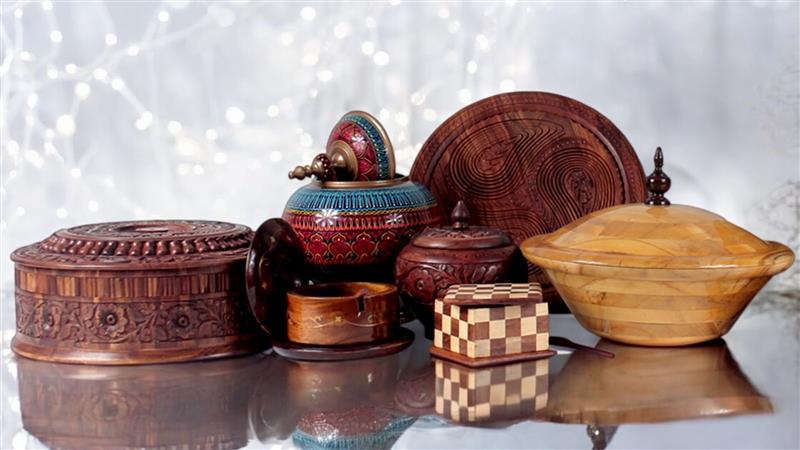
Keep wooden jewelry boxes on a dresser or shelf rather than a bathroom counter. Open and close lids gently, and don’t overload trays or hinged cantilever arms. If the box is velvet-lined, a lint roller or soft brush freshens the lining. Leaving the lid open for a while now and then lets air circulate.
Wall shelves and racks
For handcrafted shelf racks and wall shelves, the main things to watch are weight and placement. Spread heavier items across the shelf rather than piling them at one end, and check the wall fixings from time to time. Avoid hanging shelves right above a stove, kettle or bathroom door, where steam rises.
Tables
Wooden tables take the most daily use. Use coasters under cups and glasses, place mats or trivets under hot dishes, and lift items rather than sliding them across the top. Browse Funparey’s handcrafted tables and you’ll see why a few coasters are worth it: the surface is part of the art.
Trays, serving pieces and small decor
Wooden trays and small decorative items should be wiped clean and dried soon after use. Keep them out of the dishwasher and don’t leave them soaking in the sink. If a tray is mainly decorative, keep food off the bare surface and use a cloth or plate instead.
Placement: The Easiest Way to Protect Wood
Where a piece lives matters more than any product you put on it. A few simple rules:
- Keep pieces out of strong, direct sunlight, or rotate them every few weeks so they fade evenly.
- Leave a gap between wood and heaters, air-conditioner vents and fireplaces.
- Avoid damp corners, basements and walls that sweat in the monsoon.
- Keep wooden decor away from kitchen steam and bathroom humidity.
Seasonal Care in Pakistan’s Climate
Pakistan’s seasons are hard on wood, so a quick check when the weather turns is worthwhile.
Summer and monsoon
Heat and humidity make wood swell slightly. Lids and drawers may feel tighter. Don’t force them; they usually ease again in drier weather. Keep pieces off damp floors and wipe away any condensation quickly. If you notice a musty smell, air the piece in a dry, shaded, well-ventilated room.
Winter
Dry air and room heaters can pull moisture out of wood. Keep heaters at a distance and check for fine cracks along joints and carving. If you live abroad in a very dry or centrally heated home, the same advice applies.
Common Mistakes to Avoid
- Harsh cleaners: bleach, ammonia, glass cleaner and kitchen sprays can strip or cloud a finish.
- Too much water: a wet cloth left on wood does more harm than a little dust ever will.
- Abrasive pads: scourers and rough sponges scratch the surface and can catch on carving.
- Untested products: before using any polish or oil, test it on a small hidden spot and wait a day. If you are unsure what suits a particular finish, it is safer to stick with dry dusting.
- Painted and lacquered surfaces: colorful Nakshi pieces have their own finish. Dust them gently with a soft, dry cloth and keep oils and polishes off the paint.
Dealing With Small Problems
Minor marks are part of living with real wood. A light scratch often becomes less visible with regular dusting as the surface evens out. For a water ring, dry the area thoroughly and give it time before trying anything else. If a hinge loosens or a joint opens, stop using that part until it can be tightened or repaired, rather than putting weight on it.
Remember that small differences in color, grain and carving are a normal part of handmade pieces. They are not damage; they are what make each one unique.
Build a Home Full of Wood That Lasts
With a soft cloth, a dry brush, sensible placement and a little attention when the seasons change, your handcrafted wood will stay beautiful for years and may well be handed down. Explore Funparey’s full range of wooden crafts, from carved boxes to shelves and tables, and bring home a piece that gets better with every year of care.