
Blog Details
- October 31, 2026
The Art of Hand-Carved Wooden Jewelry Boxes
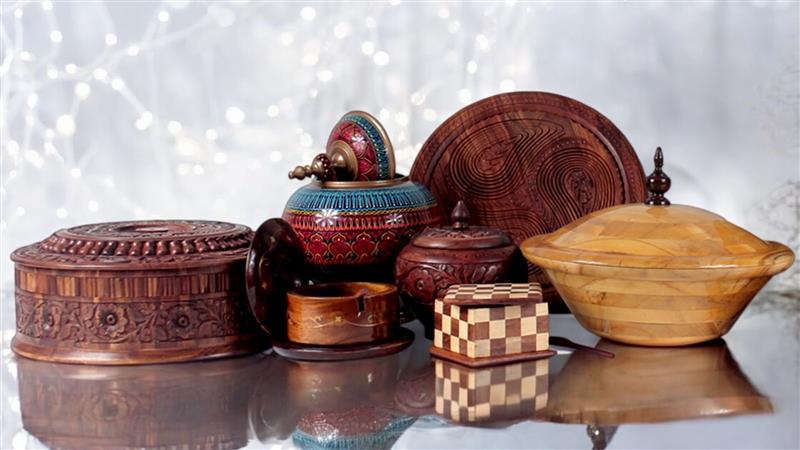
Hand-carved wooden jewelry box craft is slow, patient work. Before a box ever holds a ring or a pair of earrings, a block of wood has been cut, joined, drawn on, carved by hand with small chisels, smoothed and finished. Understanding that process changes how you see the box on your dresser. It stops being just storage and becomes a small record of someone’s skill.
This piece looks at the craft itself: how a carved box is made, what the patterns mean, and how to recognise good carving when you see it.
What makes hand-carved wooden jewelry box craft special
Wood carving has deep roots across Pakistan and the wider subcontinent. It shows up on old doors, window screens, furniture and household boxes, and the same visual language carries into the jewelry boxes made today. What sets a hand-carved box apart from a machine-routed one is not only the pattern but the way it is cut.
- Every cut is made by hand. The depth and angle of each groove change slightly, which gives the surface life when light falls across it.
- The design follows the wood. A carver reads the grain and adjusts as they go, something a machine cannot do.
- No two boxes match exactly. Even boxes made from the same drawing differ in small ways, which is part of their value.
How a carved jewelry box is made
Workshops differ, but the broad stages of the craft are similar wherever traditional carving is practised.
1. Choosing and preparing the wood
Carving starts with solid wood that is dry and stable. Wood that still holds too much moisture can crack or warp later, so seasoned timber matters. The pieces are cut to size for the lid, sides and base.
2. Building the box
The body is assembled first, or the panels are carved before assembly, depending on the design. Corners and hinges need to be accurate, because a lid that does not sit flat spoils even the finest carving.
3. Drawing the pattern
The design is drawn or transferred onto the surface. Many carvers work from patterns they have used for years, adapting them to the size of each box. This stage decides the balance of the finished piece: where the eye lands first, and how the border frames the centre.
4. Carving
Using a set of chisels and gouges of different widths and curves, the carver removes wood around the design so the motif stands out in relief. Fine details such as petals, leaf veins and border beading take the most time. A single lid can take many hours of steady, careful cutting.
5. Smoothing and finishing
After carving, the surface is sanded and cleaned out so no rough fibres remain in the grooves. A finish is then applied to protect the wood and bring out its colour. Several of the boxes in our range note that they are treated with surface and paint hardeners for longevity, which helps the carving keep its crisp edges over time.
Patterns you will see on carved boxes
Most carved jewelry boxes draw on a few families of motifs.
- Floral and vine work. Flowers, buds and climbing vines are the most common, often spreading from the centre of the lid toward the corners.
- Geometric patterns. Stars, interlocking lines and repeating shapes reflect the long tradition of geometric design in Islamic art.
- Borders and frames. A carved border around the edge of the lid or sides gives the design structure and makes the box feel finished.
- Combined designs. Many boxes pair a floral centre with a geometric border, balancing soft curves against straight lines.
Carving compared with Nakshi and lacquer finishes
Funparey also sells jewelry boxes decorated with Nakshi or lacquer art, and it helps to know the difference. Carving works by removing wood to create texture and shadow, so the beauty is in the depth and the natural tone of the timber. Nakshi and lacquer boxes are about colour: the decoration sits on the surface in bright reds, blues, greens or gold. Both are handmade traditions. Carved boxes tend to suit rooms with warm wood furniture, while lacquer boxes add a pop of colour.
How to recognise good carving
When you look at a carved box, in person or in close-up photos, check a few things:
- Clean edges. The outline of each motif should be crisp, without torn fibres or splinters.
- Even depth. Background areas should be cut back fairly consistently so the design reads clearly.
- Balanced layout. The pattern should feel centred and complete, not squeezed at one end.
- Smooth grooves. Run a finger lightly over the surface. Good carving feels smooth, not rough.
- A well-fitting lid. The lid should close evenly and the hinges should feel secure.
Small variations are a sign of handwork, not a fault. Look for overall quality rather than machine-perfect symmetry.
Carved boxes in our collection
Our hand-carved jewellery boxes show the craft at different scales. The Hand Carved Wooden Jewelry Box 8/5 Splendid measures 8 by 5 inches with a carved solid-wood body, while the Hand Carved Premium Wooden Jewelry Box 7/10 uses thick solid wood and has a roomier interior for jewelry, watches or keepsakes. Smaller 4/6 boxes suit a few everyday pieces or a gift.
If you are deciding which size or layout to buy, our wooden jewelry boxes buying guide walks through the practical choices.
Keeping the carving at its best
Carved surfaces gather dust in their grooves, so brush them gently with a soft, dry brush. Avoid water, sprays and harsh polish, and keep the box out of direct sun and away from damp. A carved box looked after this way can stay beautiful for many years and be passed on. For more detail, read our guide to caring for handcrafted wooden pieces.
A box that carries the maker’s hand
When you choose a hand-carved box, you are choosing hours of skilled work and a tradition that has been passed from one generation of carvers to the next. Take a look at our carved jewellery box collection and find one whose pattern speaks to you, for your own dresser or as a gift someone will keep for life.